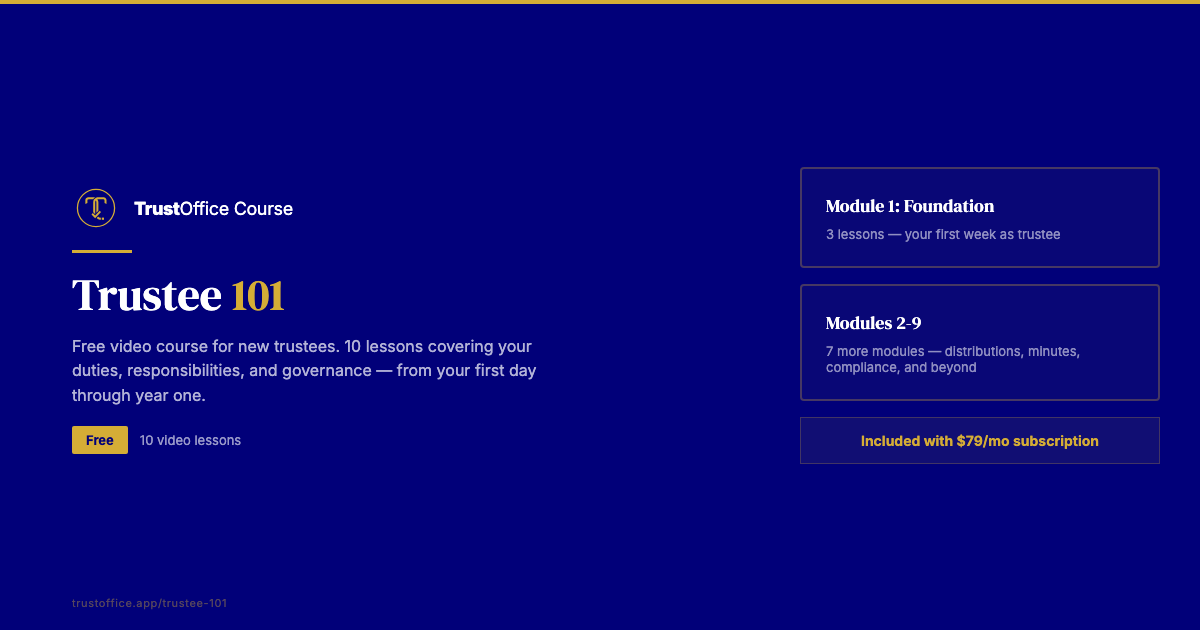
Expert Tips to Free Trustee Course
Register for a No-Cost Estate Manager Course to Strengthen Your Skills Now
Joining a free trustee course can substantially improve one's work-related capabilities. It communicates core knowledge about trustee obligations and investment management. Course participants can learn at their own pace while building connections with experienced professionals. This opportunity not only enriches perspective but also enables professional advancement. However, many may question what specific competencies they can expect to secure and how these can be used in practical scenarios.

Essential Capabilities You'll Obtain From a Free Trustee Course
A free trustee program equips participants with fundamental knowledge vital for sound management and management. The course content typically covers key areas such as financial education, enabling trustees to understand budgets, financial statements, and investment approaches. Participants also gain insights into legal responsibilities, guaranteeing compliance with regulations and ethical standards.
Additionally, the training improves strategic planning abilities, furnishing participants to participate in long-range organizational targets. Effective communication competencies are yet another vital feature, permitting trustees to express thoughts in a clear manner and connect with stakeholders productively.
Furthermore, teamwork and leadership skills are stressed, encouraging teamwork among board members and promoting a constructive decision-making process. Dispute management techniques are also instructed, preparing participants to handle disagreements professionally.
Ultimately, these capabilities not only equip people for their roles as trustees but also improve their overall management skills, making them precious resources to any organization.
Essential Advantages to copyright for a Free Trustee Class for Professional Growth
While numerous experts seek ways to enhance their professional paths, enrolling in a free trustee course provides distinctive benefits that can significantly enhance one's trajectory. First, these courses deliver crucial information about fiduciary responsibilities, enhancing a professional's reputation in their field. Comprehending the legal and ethical duties of a trustee can create additional career opportunities and responsibilities.
Furthermore, engaging with industry professionals and peers during these courses can lead to valuable relationships that may facilitate career advancement. Participants also gain practical abilities in accounting and oversight, which are in great demand in multiple industries. Finally, the adaptability of online formats permits individuals to study at their own speed, making it easier to manage education with existing work commitments. Overall, signing up for a free trustee course not only expands knowledge but can also considerably improve professional opportunities and career expansion.
Discovering the Ideal No-Cost Trustee Class for You
How might one find the most fitting free trustee course from the extensive range obtainable? First, individuals must assess their particular requirements and professional aspirations, identifying what skills or knowledge deficiencies they intend to learn the details cover. Next, investigating curriculum and design is crucial; a structured course description can indicate whether the course will align with your needs.
Furthermore, assessing the qualifications of the teachers can offer understanding into the standard of education provided. Reviews and testimonials from previous students are invaluable, as they demonstrate actual results and experiences.
Finally, copyrightining the pliability of the course format—whether it is self-paced or scheduled—can help in picking a course that accommodates one's lifestyle. By weighing these considerations, students can make a more informed decision, guaranteeing the picked program matches their career ambitions and learning preferences.
Smart Practices for Getting the Most from Your Trustee Course
Achieving the greatest benefits of a trustee course calls for a careful approach. Participants need to begin by setting clear goals and identifying the exact skills or knowledge they aim to acquire. Active participation in the learning experience is necessary; this includes joining discussions, posing questions, and working with peers. Regular review of the course materials aids in reinforcing understanding and retention of key concepts.
Furthermore, it is helpful to take notes and create summaries of key subjects, enabling easier revision later. Networking with peer attendees can provide valuable insights and support, cultivating a community atmosphere. Leveraging supplementary resources, such as suggested texts or web-based discussions, can enhance understanding and implementation of learned skills.
Ultimately, implementing the knowledge in practical scenarios, whether through real-life scenarios or simulations, solidifies learning and enhances self-assurance in trustee responsibilities. By adhering to these approaches, individuals can fully leverage their trustee course experience for professional and personal development.
Everyday Utilizations of Fiduciary Proficiencies in Organizational Leadership
Trustee competencies are vital in effective governance, allowing individuals to traverse intricate institutional environments. These competencies are essential for promoting openness, responsibility, and principled choices within various entities, including nonprofits, educational institutions, and corporate boards. Trustees equipped with robust analytical capabilities can assess organizational performance, financial health, and adherence to regulatory standards, thereby enhancing overall governance.
Moreover, strong interpersonal skills enable trustees to interact with stakeholders, ensuring that diverse perspectives are considered in decision-making processes. Dispute resolution skills are just as vital, since they help maintain harmony and collaboration among board members and other stakeholders. Additionally, long-term planning capabilities enable trustees to synchronize organizational goals with wider objectives, ensuring sustainability and growth. In this way, the use of trustee skills in governance strengthens institutional frameworks but also fosters trust and integrity within communities and organizations.
Frequently Asked Questions
Do Industry Associations Accept Complimentary Trustee Classes?
Free trustee courses may not always be acknowledged by industry bodies. Accreditation usually relies on the training institution and the particular accrediting authority, so enrollees should confirm qualifications before enrolling in any course.
What Duration Does a Common Free Trustee Course Require to Finish?
A typical complimentary trustee course generally takes between four to eight weeks to complete. Course duration may differ depending on the organization, content depth, and participant engagement, allowing for flexibility in learning schedules.
Is it Feasible to Acquire a Document Upon Completing a Free Trustee Course?
Yes, participants can typically obtain a diploma after completing a free trustee course. However, certification availability may vary by organization, so people should confirm the specific details with the course organization before registering.
Can I Register in Unlimited Trustee Classes, or Exist Restrictions?
There is typically no limit to the number of trustee courses one can take part in. Individuals are motivated to complete multiple courses to expand their knowledge and skills in trustee duties and management.
What Conditions Must Be Satisfied to copyright in a Free Trustee Course?
To register for a free trustee course, attendees typically require a elementary comprehension of financial principles, commitment to the length of study, and sometimes earlier involvement in fiduciary roles. Exact qualifications may vary by institution.